
The No-Rebate Reality Check: How To Upgrade To A Heat Pump Without Paying Contractor Markups
If you live in an area where local utility companies and State energy offices offer zero rebates or grants for heat pump installations, the financial math of going green looks completely different.
While State discounts and utility rebates help, a traditional contractor-installed heat pump system routinely runs between $8,000 and $15,000+ once labor, permits, markups, and required electrical upgrades are factored in. Without local rebates to soften that blow, the payback period stretches out for years, turning what should be a smart energy upgrade into a major financial headache.
There is a smarter way forward: High-efficiency, consumer-accessible equipment that lets you bypass most of the traditional HVAC labor markups.
Whether you are looking to condition a single room or complete a whole-home central ducted swap, you can take control of the installation process, save thousands upfront, and achieve superior climate control on your own terms.
Two Paths To Independent Comfort
Depending on your layout, two industry-leading solutions make it entirely possible to sidestep high contractor bills without sacrificing modern, inverter-driven efficiency.
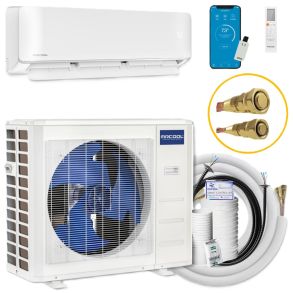
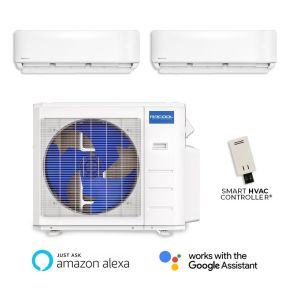
1. For Room Additions, Garages, or Zone Heating: The MRCOOL DIY® 5th Generation Mini-Split
If you need to condition a specific space—like a sunroom, workshop, master suite, or detached garage—paying an HVAC contractor $4,000 or more to install a single-zone system makes zero financial sense.
The Tech: The 5th Generation MRCOOL DIY series is engineered from the ground up for true homeowner installation. It comes pre-charged with eco-conscious R-454B refrigerant and features a patented Quick Connect line set and DIYPRO cable.
Why It Works: No specialized HVAC tools, vacuum pumps, or EPA certifications are required. You (or your handyman) and your electrician can mount the air handler, run the lines, click them together, power the equipment and have the system running over a weekend—saving you thousands in labor.
Best For: Homeowners tackling single zones or multi-room additions where HVAC contractor quotes are bloated and local rebates are non-existent.
2. For Whole-Home Central Air: The MRCOOL VersaPro™ Inverter System + No-Vac® Line Set
If you already have a network of home ductwork and want to swap out an aging gas furnace or inefficient AC for a central heat pump, you don’t necessarily have to write a blank check to a local HVAC company.
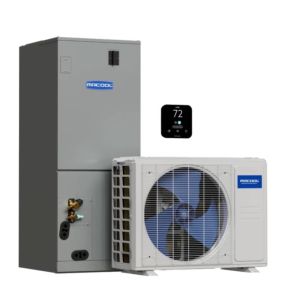
The Tech: The VersaPro 2nd Gen Central Ducted System is multi-positional (upflow, downflow, or horizontal) and designed to drop directly into existing duct plenums. When paired with an optional MRCOOL No-Vac® Pre-Charged Line Set, it eliminates the traditional brazing and vacuum bottleneck.
Why It Works: While you shouldn’t handle high-voltage electrical work unless qualified, you hire a standard licensed electrician (rather than a high-markup HVAC contractor) to handle the power supply, disconnect box, and low-voltage control wiring. The mechanical placement and pre-charged line connections complete the loop without needing an EPA refrigerant license.
Best For: Whole-home retrofits in zero-rebate zones where you want to split the labor: hiring an electrician for the power, and managing the mechanical drop-in yourself (or with your handyman).
Why the “No-Rebate” Strategy Wins
Upfront Savings Outweigh Paper Incentives: A rebate is only valuable if it actually exists in your zip code. In many States that have not yet rolled our the HEAR/HEEHR programs and/or where Utilities do not offer rebates, waiting for a localized incentive is a losing game. Cutting out the middleman can saves you ~40% to 60% on the total installed cost.
Predictable Pricing: No surprise change orders or inflated HVAC contractor material markups. You buy the exact matched system bundle you need, delivered directly to your doorstep.
Modern Inverter Efficiency: Both options utilize advanced variable-speed inverter compressors, meaning you still capture massive energy savings on your monthly utility bills compared to older, single-stage equipment.
Ready to Take Control?
Don’t let a lack of local government or utility incentives stop you from upgrading your home’s comfort and energy efficiency.
Explore the MRCOOL DIY 5th Generation Heat Pump Lineup for room-by-room ductless or ducted comfort.
Part 1: The Ductless Line (MRCOOL DIY 5th Gen Single & Multi-Zone)
Best for targeted zones, multi-room retrofits, additions, garages, and outbuildings.
The 12,000 BTU (1 Ton) Single-Zone System — The Bedroom & Office Standard
Target: Rooms from 400 to 600 sq. ft. This is the highest-volume seller for single-room comfort upgrades.
The 18,000 BTU (1.5 Ton) Single-Zone System — The Living Area & Open Space Standard
Target: Larger spaces, master suites, or open-concept living rooms spanning 600 to 1,000 sq. ft.
The 24,000 BTU (2 Ton) Single-Zone System — The Large Zone / Garage Standard
Target: Big multi-use spaces, large workshops, or detached garages ranging from 1,000 to 1,500 sq. ft.
The 27,000 BTU 2-Zone System (12K + 12K Configuration) — The Multi-Room Standard
Target: Multi-room comfort, such as conditioning a master suite and a large living area simultaneously (up to ~1,000 sq. ft. total across two rooms).
Important Note: Multi-zone bundles require pre-charged line sets for each indoor unit. Be sure to select a line set length for both handlers in the drop-down options before checking out!
Part 2: The Central Ducted Line (MRCOOL VersaPro 2nd Gen + No-Vac®)
Best for whole-home retrofits utilizing existing ductwork and an electrician.
The 2 Ton (24,000 BTU) System — The Small Home / Condo Standard
Target: Smaller footprint homes, townhomes, or specific zones/floors of a house (typically covering 1,000 to 1,200 sq. ft.).
The 3 Ton (36,000 BTU) System — The Mid-Sized Home Standard
Target: The single most common residential central system size, comfortably handling average-sized suburban homes (roughly 1,500 to 2,000 sq. ft.).
The 4 Ton (48,000 BTU) System — The Large Home Standard
Target: Larger single-family homes (2,000 to 2,500+ sq. ft.) where a traditional contractor swap would otherwise trigger a massive 5-figure invoice.
⚠️ Important Central Ducted Note: select your matched No-Vac® pre-charged line set length using the dropdown options before checking out when ordering your central ducted bundle, as line set lengths vary depending on the distance from the outdoor pad to the indoor air handler/attic/crawlspace.
Want the complete step-by-step blueprint? View and print our free guide: The DIY & Prosumer Heat Pump Blueprint: Bypassing High Labor Costs & Zero-Rebate Dead Zones for detailed electrical scoping checklists and installation breakdowns.
Central Heat Pump Replacement Tip #1….Important Duct Check
If you are swapping an old electric air handler, your ducts are likely already primed for a heat pump’s high-airflow needs. If you are replacing an old gas furnace, have a pro check your static pressure and duct sizing first to ensure your trunk lines can handle the increased CFM an inverter heat pump requires.
When replacing an older gas furnace…..To avoid relying on a traditional HVAC contracting company (and paying their high diagnostic service fees), other types of certified “pros” and specialists can do the job:
1. Certified Home Energy Auditors (HERS Raters)
What they do: Home Energy Rating System (HERS) raters or building performance analysts look at the whole-house thermal envelope.
How they help: They routinely perform Manual J load calculations (to calculate exact heating/cooling requirements) and blower door/duct leakage tests. They can tell you precisely how much cubic feet per minute (CFM) your current duct layout delivers and whether your duct system can handle an inverter heat pump’s airflow demands.
Why it’s a great alternative: They are objective third parties. They don’t sell HVAC equipment, so they have no financial incentive to tell you that you need an entirely new duct system or an oversized unit.
2. Independent Mechanical Engineers or Energy Consultants
What they do: Independent consultants or small energy-efficiency engineering firms specializing in residential retrofits.
How they help: They can review building blueprints, measure room dimensions, evaluate trunk line sizes, and run formal Manual D calculations (the industry standard for duct design and sizing).
Why it’s a great alternative: Perfect for prosumers who want an engineered, data-backed green light before ordering a central ducted system online.
3. Progressive Energy Auditors through Local Electric Utilities
What they do: Many progressive electric co-ops or municipal utilities employ or contract energy advisors.
How they help: Even if your region doesn’t offer direct financial rebates for purchasing the equipment, many utilities still offer low-cost or free home energy audits as part of their demand-reduction programs. Their technicians often carry flow hoods and manometers to test system airflow.
Why it’s a great alternative: It’s often heavily subsidized or completely free, giving you professional insights into your home’s envelope and airflow without hiring a private contractor.
Need a Third-Party Inspection? Skip the HVAC Salesman:
For Whole-House Energy Ratings: Use the RESNET National Registry to find a certified HERS Rater.
For Blower Door & Duct Testing: Search the BPI Professional Directory for a certified Building Analyst.
For Low-Cost Utility Audits: Check your local electric provider’s energy-efficiency portal.
Central Heat Pump Replacement Tip #2: How Do I Know The Size (Tonnage) Of My Existing Equipment
Manufacturers don’t spell out system sizes in plain English like “3 Tons” on their data plates. Instead, they bake the capacity right into the Model Number using a hidden code.
Step 3-Step Field Guide:
Head Outside: Walk to your outdoor AC condenser unit and locate the silver or foil Rating Plate / Data Plaque (usually located near where the copper lines enter the cabinet).
Find the Model Number: Look for the line labeled “Model No.” or “M/N” (make sure not to confuse it with the Serial Number).
Spot the 2-Digit Code: Scan the string of letters and numbers for a key two-digit number. That number represents thousands of BTUs per hour. Divide that number by 12, and you have your exact tonnage.
Quick Reference Conversion Matrix
| Hidden Code in Model Number | Total BTU Capacity | Equivalent Tonnage Size | Best Match MRCOOL VersaPro System |
| 18 | 18,000 BTU | 1.5 Tons | Check mini-split line or custom configuration |
| 24 | 24,000 BTU | 2.0 Tons | MRCOOL VersaPro 2 Ton Central Unit |
| 30 | 30,000 BTU | 2.5 Tons | Match up to nearest sizing standard |
| 36 | 36,000 BTU | 3.0 Tons | MRCOOL VersaPro 3 Ton Central Unit |
| 42 | 42,000 BTU | 3.5 Tons | Check custom sizing requirements |
| 48 | 48,000 BTU | 4.0 Tons | MRCOOL VersaPro 4 Ton Central Unit |
| 60 | 60,000 BTU | 5.0 Tons | MRCOOL VersaPro 5 Ton Central Unit |
Real-World Brand Examples:
Carrier / Bryant: If the model is
24ABC6**36**A003, look at the mid-digits: 36 ÷ 12 = 3 Tons.Goodman / Amana: If the model is
GSX14**036**10, the digits right after the SEER rating are 36 ÷ 12 = 3 Tons.Trane / American Standard: If the model is
4TTR60**48**A1000AA, the zero-padded digits are 48 ÷ 12 = 4 Tons.